

I look forward to this Conference every year. It really helps me to be a more effective firm leader.

The MPIEs are interesting, informative and useful!

The Conference was terrific, as it exposed me to many issues facing my firm.

The attendees were excellent, and they were very open to candid discussion.

A very organized and well-run conference. Great food. Great hospitality.

A very informative conference with lots of fresh ideas and perspectives.

The benchmarking data presented during the opening session is fantastic. Our MPIE facilitator was great!

As always, The MPF Conference is a very enjoyable and worthwhile experience.

It was indeed a very well run and informative conference. I especially enjoyed meeting the participants and other faculty and learning from them. Thank you, John, for giving me the opportunity to participate.

Thank you for allowing me to participate. Your team is masterful at making all feel valued at your event and I dare say helping attendees see the value in attending.

Thank you for the invite to speak on the Managing Partner panel. Even though I have now attended 7 MPFs, I always bring back substantive and helpful information for my partners.

From my perspective, the conference went extremely well. Thank you for inviting me to participate; I was proud to be part of a very talented faculty. Congratulations to all!

Many thanks. Always a pleasure and an honor.

Thanks for partnering with us from the ABA Law Practice Division. Very well organized. Your team knows precisely what they are doing and we appreciate you.

Was looking over some old MPF materials and recalled how great this event is. Wanted to thank you all again. I really enjoyed it.

Hands down the best leadership conference for managing partners I’ve ever attended.

I highly recommend the MPF Leadership Conference. I’ve participated many times, as have several of my partners. We leave with new ideas and fresh perspectives every time.

It's a great format overall, and the MPIEs provide a fabulous exchange for ideas and perspectives.

I’ve attended two events through John’s Managing Partner Forum. They are always of high quality, and provide invaluable information that is useful to our firm.

Thank you so much for such a wonderful conference. It was invaluable, and I am already looking forward to next year.

The conference was tremendous and I've already made tentative plans to attend next year's event. I've also reached out to other firm leaders I know to let them know the advantages of the Managing Partner Forum. Thank you.

Our new managing partner, Wynn Shuford, attended your conference last month and has raved about it ever since. Thanks for your continued great work in the area of law firm leadership.
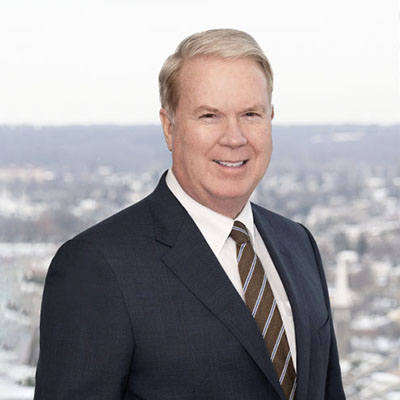
I very much enjoyed The Managing Partner Forum and thank you for putting on such a great program. I’m planning to attend again next year.

MPF is a great conference, with excellent interaction among peers.

MPF provides tremendous value and excellent resources. Great information. Great speakers. Great networking opportunities.

This is a fantastic conference with great topics and great people. The sharing of ideas and information among managing partners is invaluable.

An excellent program and overall very valuable experience. Bright participants, terrific discussions and outstanding statistics. I’ll be back.

The MPF provides a very consistent and solid program.
A great program! It was very helpful to hear both the faculty and participants comment on key issues.
I thoroughly enjoyed participating in this year's Conference. Thank you for your enthusiasm and leadership.
Thank you for what you do for our industry. I go to a lot of conferences, and your event is the one I look forward to and gain the most from each year.
In particular, I valued the breakout sessions, which allowed for informal conversations on jointly shared issues.
As a first time attendee, I really enjoyed it!
I gained much value from the candid sharing of ideas and interaction with other managing partners.
What great participation from other managing partners! There’s no other conference like it.
The opportunity to spend an entire day sharing ideas with other managing partners was very therapeutic. I feel better knowing that I am not alone.
The instant statistical feedback during the Opening Session and the opportunity to share experiences with other firm leaders were great.
The group dynamics in the MPIE sessions are a great value. I liked Susan Hackett (General Counsel of the Association for Corporate Counsel) on Skype, too.
The information exchange was great, especially since I don't have a lot of colleagues in this area. This was a really nice event.
I very much enjoy these programs, especially the open exchange of information among fellow managing partners.
A very well-run program, with good issues and great exchange among participants. Thanks for the invitation.
What do I like best? The MPIE sessions and meeting so many managing partners in one place.
A very well planned and executed conference. I’ll be back.
A great event. Thank you for the invitation. I’ll be back next year.
I found this conference to be extremely valuable. We all face very similar challenges, and it’s comforting to know that others share the same questions and concerns.
The faculty and breakout sessions were great. I also enjoyed the first-class location. Please keep me on your invitation list.
I continue to tell people that the MPF is the single, most valuable conference I've ever attended.
This was a great seminar. I especially enjoyed the open sharing of ideas among firm leaders.
The MPIE sessions are always very helpful. We implemented several successful programs after the last Forum and I expect we'll do so again after what I learned today.
I’m really impressed with everything about The Managing Partner Forum. Very useful.
The roundtable discussions with other managing partners in the MPIE sessions was exceptionally valuable.
A terrific program. The interactive sharing of information in a non-competitive atmosphere among peers was most valuable to me.
The Managing Partner Idea Exchanges (MPIEs) are excellent.
The Florida focus is what distinguishes this program from others and gives it particular relevant value.
I attended The Managing Partner Forum and thought it was outstanding. The program provided an excellent opportunity to benchmark my firm’s performance with our peer group.
The Managing Partner Forum is a rare opportunity to network with my peers from throughout Florida. I highly recommend it.
Since the majority of our firm’s business is referred by other law firms, The Forum is a great place to catch up with our clients while also learning from my peers. It’s a terrific program.
The MPF brings together the leaders of Florida's top firms, together with experienced consultants, for a great exchange of ideas and information. It's an excellent resource.
The true value comes from the opportunity to share solutions with your professional peers. I highly recommend this program to any managing partner.
This is a dynamic industry and the Managing Partner Forum is a great place to learn about how other firms are adjusting to it.
The opportunity to spend the day exchanging ideas and solutions with other managing partners is what I liked best.
I thoroughly enjoyed it! The MPIEs were especially worthwhile and very well presented.
The interactive sessions were great and the facilitators did a fantastic job.
I got an unbelievable number of great ideas in the Managing Partner Idea Exchange sessions.
The MPIE sessions were rich in content, and are what make this leadership conference better than all the rest.
I truly appreciated the opportunity to interact with other managing partners throughout the region. Well done!
The exchange of ideas was well worth my time and money. I'll be back.
The format was excellent and the program was well organized. I will definitely return. The organizers do a fantastic job.
The MPF presents a rare opportunity to exchange ideas and learn how other firm leaders are handling difficult and challenging situations.
The MPF is unique among law firm conferences because it features relaxed, informal discussions among managing partners from other large firms.
The format was terrific. It gives participants the ability to interact and compare notes with other firm leaders.
Thank you for putting on another outstanding MPF Conference. I came away, once again, feeling reassured and encouraged.
The MPF provides much-needed interaction for those of us in the 'isolated' role of managing partner of a mid-sized firm. I liked the professionalism of the attendees.
The MPF is unique because it is an exclusive and productive gathering of many peers at one time. The perspectives and insights are invaluable.
The successful managing partner develops a clear sense of strategic direction, so that on most days most partners are marching in the same direction. How one does this is what the Forum is all about.
The MPF provides a rare opportunity for managing partners to gather and share insights and perspectives on ways to be more effective law firm leaders.
There is a difference between leadership and management. Law firms need both. The managing partner must be the keeper of the vision and its continuous champion.
The Managing Partner Forum provides a unique venue to network with other managing partners so I can learn new ways to be more successful in today’s climate.

The Managing Partner Forum offers an invaluable opportunity to learn about the latest trends in the legal industry and to compare notes with other law firm leaders.
The exchange of practical ideas and hearing success stories from other managing partners is what I liked best. This program could have easily lasted two days.
The exchange of ideas and valuable information was impressively solid throughout the day. I appreciate the opportunity to be included.
The discussions were surprisingly open and productive. I came away with much information on where we are doing well, ideas for improvement and strategies for capitalizing on opportunities.
I was impressed by the openness with which the participants shared their experiences, procedures and policies.
I especially liked the information sharing and the chance to network with other managing partners.
I’ve attended many law firm leadership conferences over the years and this is one of the best. A great program with outstanding participants.
Great job! The Managing Partner Forum exceeded my expectations – very valuable. Thanks for including me.
The sessions on strategic planning and the interactive afternoon sessions were extremely valuable.
All in all, a very well-run program. The ability to interact with other managing partners was especially valuable.
The opportunity to meet and interact with other managing partners in such a high level setting was well worth the price of admission.
The Managing Partner Idea Exchanges were the best part of the day. I very much appreciate the opportunity to participate and will be here again in the future.
The Keynote Presentation was concise, to the point and had great written materials and presentation slides. It certainly measured up to its advertising and then some!
A terrific conference. I was impressed by the wide variety of viewpoints and candidness of the participants.
The MPF is a first-class event. It’s a rare opportunity to interact and learn with other managing partners, and there is nothing else quite like it.
“What gets measured gets done.”
“What's measured improves.”
– Peter F. Drucker
Our MPF Leadership Matters survey for May 2014 was a follow-up to our March survey covering strategic planning. That survey found that setting and using objective measures to track strategy implementation were keys to success.
The question is: Do law firms measure the key elements of their own strategies? Are they, in fact, measuring what they are managing?
Robert Kaplan and David Norton, authors of The Balanced Scorecard: Putting Strategy into Action, put systematic rigor behind measuring key elements of strategy. That is the essence of the “balanced scorecard” – which looks beyond today’s financial performance, embracing an additional set of measures that link to major goals and objectives and allow management to track whether these longer-term strategies (and strategy implementation) are working.
A classic balanced scorecard includes measurable objectives in these four important areas:
In his great book, True Professionalism, David Maister writes about the importance of looking beyond today’s billable hours and investing in the future of your law firm. He writes eloquently about the importance of investing in your clients, in your people and in your firm. Yet, we find that very few law firms effectively measure these longer-term, firm-building contributions.
This month we explore the extent to which firms are using measures and linking those measures to their strategic goals. These survey results are based on the responses of 56 managing partners, primarily of small to mid-size firms.
We asked managing partners to share the extent to which their firm is tracking quantitative measures in four major categories (i.e., the categories mirroring the balanced scorecard) and the graphs below set forth how firm leaders assess how well their firms apply measurable goals and objectives to the four areas discussed by Kaplan and Norton.
As you will see, they pay attention to the dollars first and foremost. Developing people and improving internal business processes are next. Client satisfaction is way down the line.

As reinforced in the graph below, firms are most advanced in the use of financial metrics, by far, according to their leaders. On average, managing partners gave their firms an A- or a B+ in the use reliable financial measures. Fully 96% of managing partners said their firms had “excellent, highly informative” financial metrics or “solid, reliable” financial measures.

By contrast, firms have very weak (to non-existent) measures of client satisfaction and/or the strength of client relationships. Shockingly, more than 90% of managing partners said they had either “limited” or no measures tracking the strength of client satisfaction.

Firms don’t do much better when it comes to tracking measures of developing and retaining talent, with more than 60% saying they have litte or no measures in this catetory.

Similar to developing talent, firm leaders say they don’t do a very good job with measures that track improvement in their internal business processes.

Roughly four-in-ten firms directly link their strategic plans to measurable objectives (very consistent with the findings of our March survey on strategic planning best practices).

In addition, managing partners’ open-ended comments regarding the measures that have had the most positive impact on performance are illuminating.
Notice those comments are almost entirely about today’s billable hours and dollars in the door, with little attention or focus on longer-term investment in the future of the firm.
Proving Drucker’s point that “what gets measured gets done,” more than 90% of the managing partners who link their strategic plans to objectives report either “a clear, positive correlation” between the use of measures and performance or at least “a modest, positive correlation.”

Managing partners’ additional comments support this point.
Generally speaking, law firms responding to this survey are not adopting a balanced scorecard, and some were introduced to the term only as a result of our survey. Only seven percent of managing partners reported that their firms have formally adopted a balanced scorecard, while one-third have “never even considered” adopting a balanced scorecard.

It should be noted that there is a very large middle in this sample. Specifically, nearly 60% of managing partners reported “adopt(ing) some balanced scorecard practices” or “informally adopt(ing) the balanced scorecard.” Managing partners are using metrics to help manage their firms, but that has not translated into an embrace of a balanced scorecard.
Firms that actively use measurable objectives to monitor and drive strategy implementation report better performance. That finding has now emerged in three of the MPF Leadership Matters surveys we’ve conducted so far this year.
As noted in the introduction, 56 managing partners participated in this month’s MPF Leadership Matters survey. The survey sample skewed toward small and mid-size firms. As a result, these results are most relevant and useful to firms under 100 attorneys.

# # #

John Sterling is the founding partner of Sterling Strategies, a firm focused on strategic planning, strategy development, and related implementation management. More information about John Sterling and Sterling Strategies is available at www.sterlingstrat.com.

John Remsen, Jr. is President and CEO of The Managing Partner Forum, the country’s premiere resource for managing partners and law firm leaders. He is also President of TheRemsenGroup, one of the country’s leading consulting firms for mid-size law firms, and can be reached at 404.885.9100 or JRemsen@ManagingPartnerForum.org.


© 2014, Managing Partner Forum
Click on link below for PDF version of this article.
 404.885.9100
 404.885.9111
 info@managingpartnerforum.org
 The Managing Partner Forum 394-A Golfview Road
© 2026 The Managing Partner Forum. SIte by Inherent Inc
